
Guppies
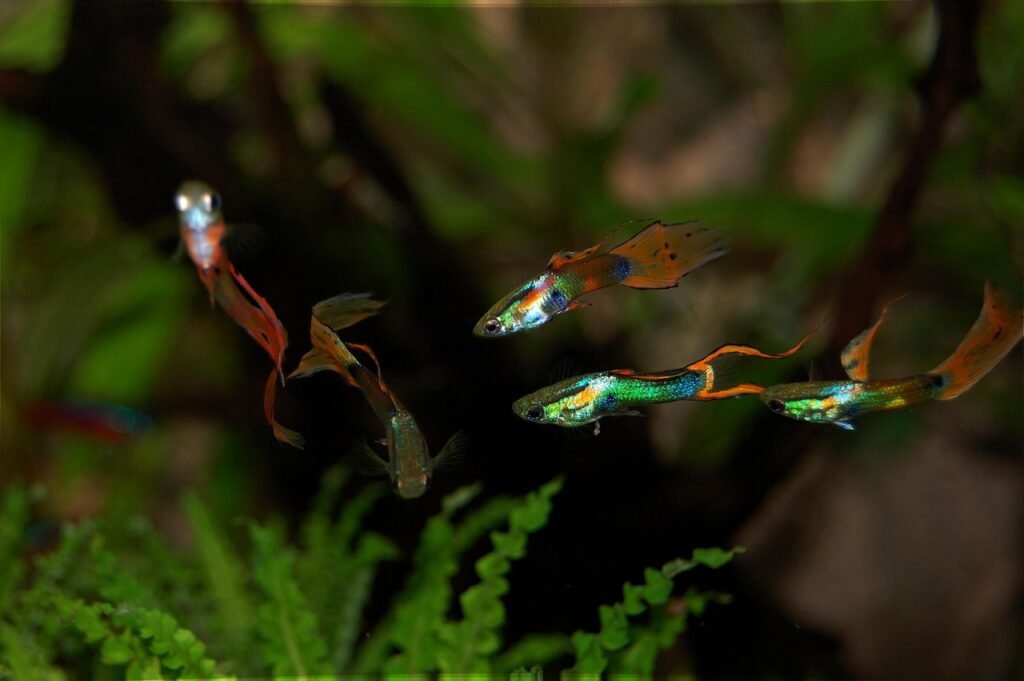
Guppy fish (guppies) – (Poecilia reticulata) are small, colorful, livebearing freshwater tropical fish popular in aquariums due to their hardiness, peaceful nature, and easy breeding, making them great for beginners. Males are smaller and more vibrant with elaborate fins, while females are larger and duller. They are omnivores, thrive in tanks with plants, and require clean, non-chlorinated freshwater. Originating from northeast South America, it has been introduced to many environments and are now found all over the world; guppies are now one of the world’s most widely distributed tropical fish and one of the most popular freshwater aquarium fish species. They are highly adaptable and thrive in many different environmental and ecological conditions.
A variety of fancy guppy strains are produced by breeders through selective breeding, characterized by different colors, patterns, shapes, and sizes of fins, such as snakeskin and grass varieties.
Two generations of guppies per year occur in the wild. Guppies are well developed and capable of independent existence without further parental care by the time they are born. Young guppies school together and perform anti-predator tactics. Brood size is extremely variable, yet some consistent differences exist among populations depending on the predation level and other factors. Females of matching body sizes tend to produce more numerous but smaller-sized offspring in high-predation conditions. Female guppies first produce offspring at 10–20 weeks of age, and they continue to reproduce until 20–34 months of age. Male guppies mature in 7 weeks or less. Total lifespan of guppies in the wild varies greatly, but it is typically around 2 years
Guppies are polyandrous, where females mate with multiple males. Multiple mating is beneficial for males because the males’ reproductive success is directly related to how many times they mate. The cost of multiple mating for males is very low because they do not provide material benefit to the females or parental care to the offspring. Conversely, multiple mating can be disadvantageous for females because it reduces foraging efficiency and increases the chances of predation and parasitic infection. However, females gain some potential benefits from multiple mating. For example, females that mate multiple times are found to be able to produce more offspring in shorter gestation time, and their offspring tend to have better qualities such as enhanced schooling and predator evasion abilities.
Guppies are highly prolific livebearers. The gestation period of guppies varies considerably, ranging from 20 to 60 days at 25 to 27.8 °C (77 to 82 °F) and depending on several environmental factors. Reproduction typically continues through the year, and the female becomes ready for conception again quickly after parturition. Male guppies, like other members of the family Poeciliidae, possess a modified tubular anal fin called the gonopodium, located directly behind the ventral fin. The gonopodium has a channel-like structure through which bundles of spermatozoa, called spermatozeugmata, are transferred to females. In courted mating, where the female shows receptive behavior following the male’s courtship display, the male briefly inserts the gonopodium into the female’s genital pore for internal fertilization. However, in the case of sneaky mating where copulation is forced, the male approaches the female and thrusts the gonopodium at the female’s urogenital pore. Once inseminated, female guppies can store sperm in their ovaries and gonoducts, which can continue to fertilize ova up to eight months. Because of the sperm-storage mechanism, males are capable of posthumous reproduction, meaning the female mate can give birth to the male’s offspring long after the male’s death, which contributes significantly to the reproductive dynamics of the wild guppy populations.
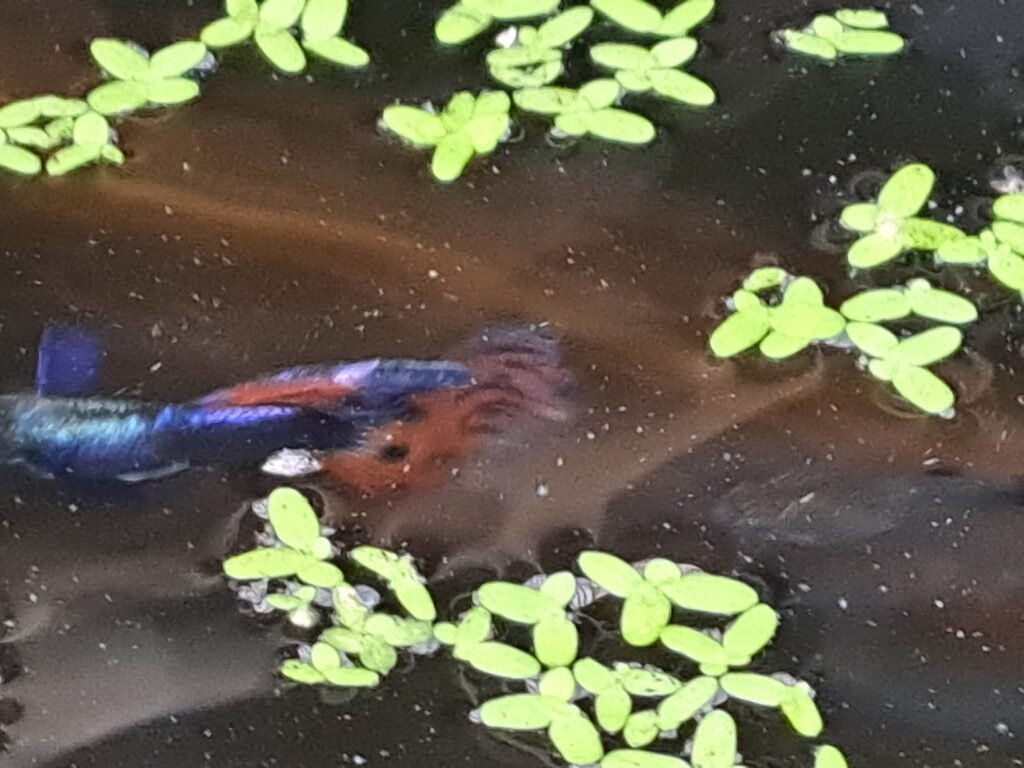
They are approximately 2 inches long. Males are smaller than females but typically more colorful. Males have bright colors and large, ornamental fins; females are larger and plainer but may also have bright colors in some hybrid varieties. There are tons of varieties with new hybrids being created all the time. Guppies are omnivores, eating flakes, pellets, and occasional live/frozen foods like brine shrimp. The also eat mosquito larvae, algae and other microscopic aquatic organisms. A 10 gallon aquarium will work for a small group of guppies, but 20 gallons is better for stability and space to accommodate babies. Guppies prefer slightly hard water.
Dechlorinated freshwater with a heater and air pump, hose and air stone are necessary. A filter is recommended to purify the water of nitrate and nitrites if there are many fish in the aquarium. Plants also assist in oxygenating and purifying the water. Live plants and ornaments are beneficial for hiding spots, especially for fry (baby guppies) since adult guppies and other fish will eat them. Guppies are compatible with most other peaceful, similarly sized fish. Caution: Other peaceful species may eat the guppy babies. They are prolific breeders. They breed very easily starting young and for their entire life. The average lifespan of guppies is 2–3 years, but they can live up to 4–5 years with excellent care. Guppies are highly social, shoaling fish that should be kept in groups of at least 4 to 6 to prevent loneliness and stress.
For optimal breeding success, maintain a ratio of 1 male to every 2–3 females to minimize harassment and a minimum of 4–6 fish to satisfy their social, shoaling behavior. If using a small aquarium/container (5 Gallons): 3–4 male guppies (avoid mixing genders unless there is adequate space to accommodate the fry, as they breed rapidly). If using a (10 Gallons) aquarium/container: 5–6 guppies, or up to 10–15 with heavy planting and strong filtration.
If you are starting with a breeding group, 1 male with 2–3 females is the standard ratio, but expect rapid population growth. A group of all-male guppies is recommended for vibrant, colorful non-stop activity without breeding.
Key Considerations:
- Space & Filtration: Proper filtration is essential, as higher numbers of fish require better water quality management.
- Breeding Behavior: Males will constantly harass females, so providing multiple females per male is crucial to prevent fatal stress.
- Crowding: Overcrowding is a risk, as guppies are prolific breeders; a 5-gallon tank can easily become overwhelmed, requiring a 10-20 gallon tank for a growing colony.
Care:
Feed adult guppies one to three times daily, providing only the amount of food they can completely consume in 1–3 minutes to avoid overfeeding and poor water quality. For maximum health, provide small, frequent meals rather than one large feeding. Guppy fry require more frequent feedings, roughly 3–5 times per day.
Key Feeding Guidelines:
- Frequency: 1-2 times daily is standard, though 2-3 times is acceptable if portions are kept very small. This is dependent on the number of fish and the size of the container in which they are growing.
- Amount: Only feed what they can consume in 1-3 minutes. Variety: Utilize high-quality flake foods as a staple, supplemented with live/frozen foods (brine shrimp, daphnia) and blanched vegetables for better health.
- Overfeeding Risks: Overfeeding leads to excess waste, causing poor water quality and potential health issues.
- Fry Feeding: Feed fry 3–5 times per day, in much smaller amounts.
- Fasting: Some keepers suggest a “fasting day” once a week to aid digestion.
If you notice your guppies are gaining too much weight, decrease the frequency to once a day or every other day.
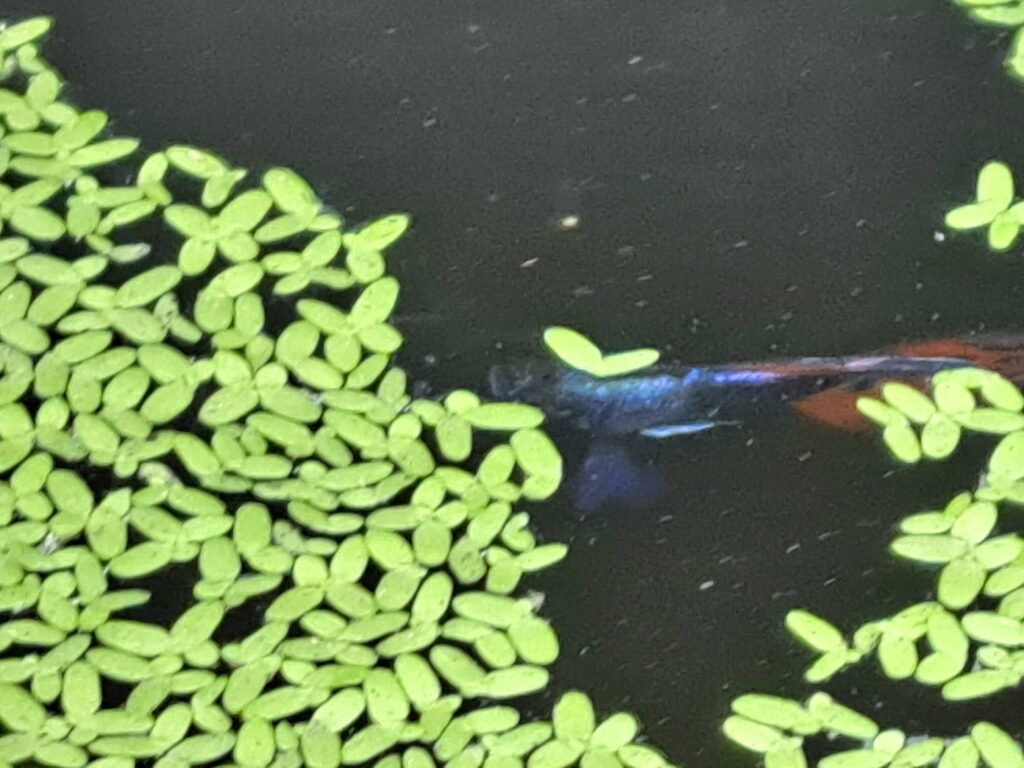
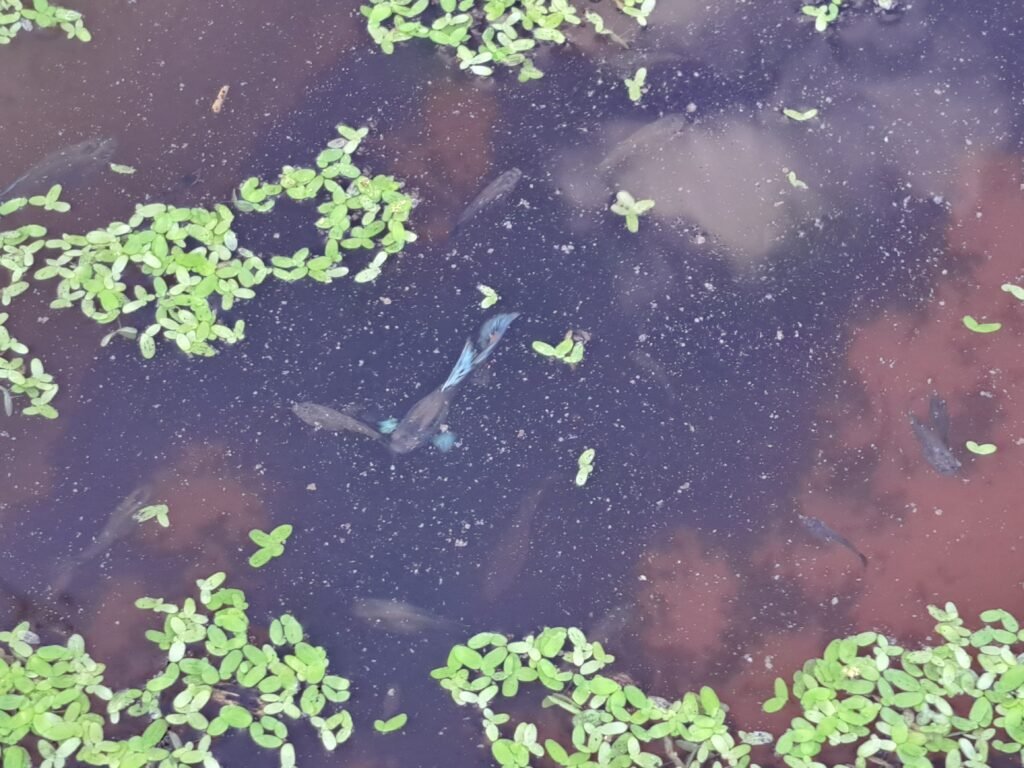
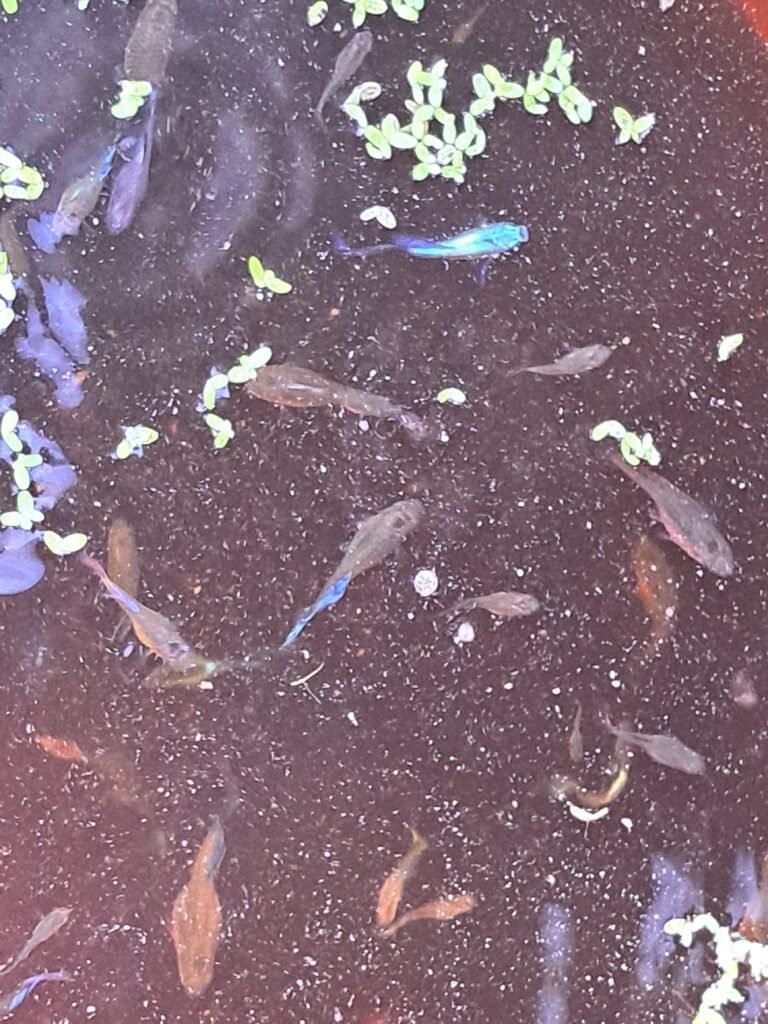
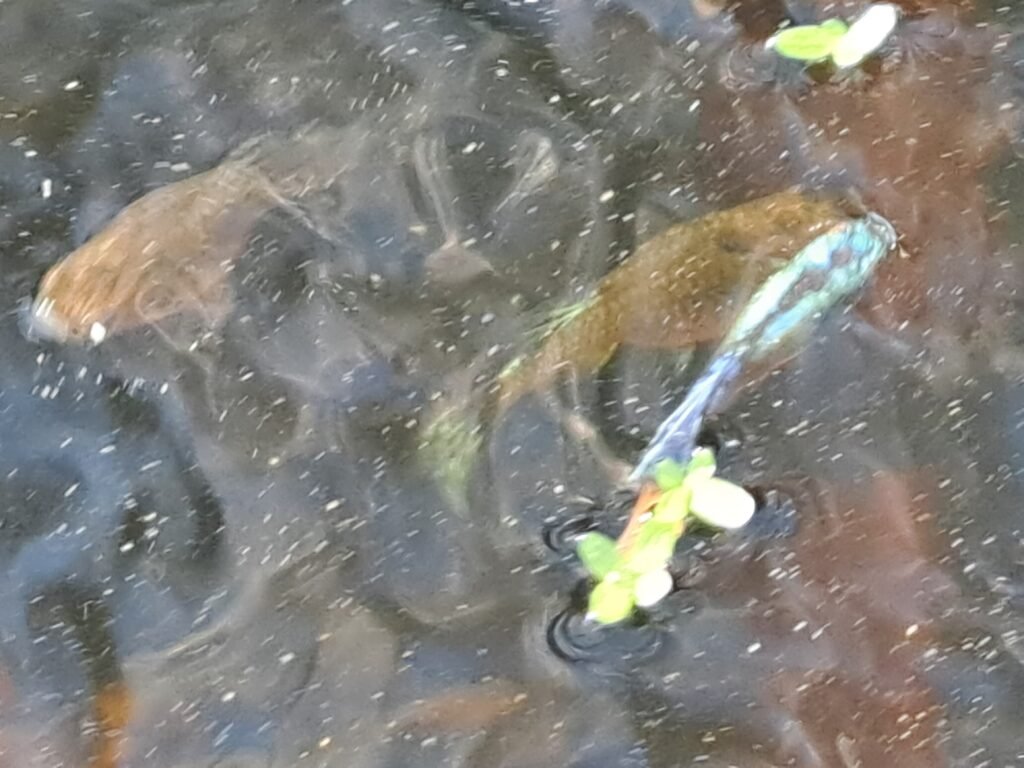
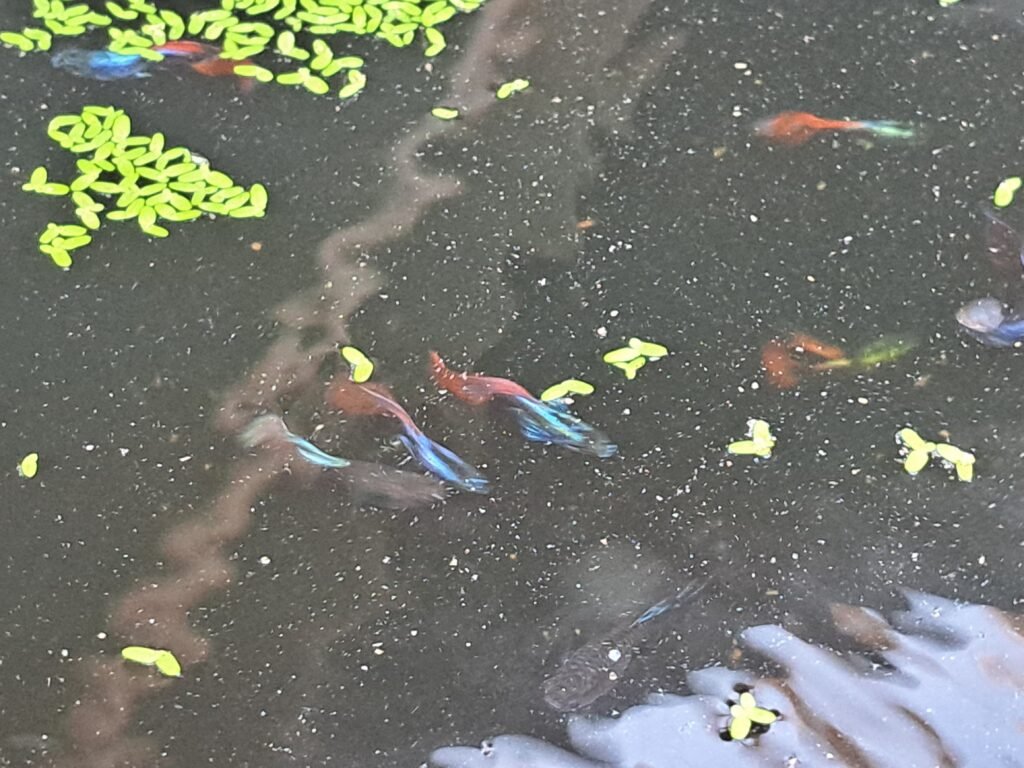
At Natural Ways farm, we grow duckweed in all our containers which are kept outside and heated in the winter to mimic conditions in the wild. We currently have dumbos, tigers, snakeskin and hybrids in green, blue, purple, and red. If interested in starting rearing guppies or having a few to enjoy and help to relax you from stressful days, feel free to contact us to discuss your needs and how we can get the fish to you. We are very careful regarding biosecurity to eliminate the risk of diseases and illnesses from outside sources.